User Feedback:
To give us the opportunity to get input from the public before taking the game to E3, an expo had been organised for the 17th May. Below are the results collected from the event:
Age-

The chart below shows you the variety of different ages of the public that attended our Expo on the 17 th May. The most popular ages that attended were 16-20 year olds, ages 21-30 were the second most popular people who answered our survey for our game with a few 41-50 year olds with the third highest responders. Surprisingly only 2 people from the under 10’s,10-15 years and over 50s came to our expo, played our game and answered our survey. Overall I’m very pleased with the mixture of ages as it gave us lots of different opinions, ideas and feelings towards our game.
Gender-

As you can see below we had 13 females and 23 males who answered our survey. We aren’t to fussed about a certain gender answering more than another, it just shows us what gender viewed our game more at our expo. There’s not a really big difference between both genders.
Thoughts on game-

This was a great question that we asked as we could get some great feedback and ideas. It’s a good way for people to express their true feelings about out game so that we can improve it if needed and get new ideas that can benefit our game. Some of the comments are like; very new and interesting, great game with good graphics, the sound was good too, futuristic, easy to play and many more positive feedback you can see below. I’m extremely pleased with the responses we got for this question, the majority of the answers were positive and appreciating our games visual style, sounds and gameplay. We couldn’t of asked for better feedback.
Would you play our game again?

The chart below clearly shows you that the majority of respondents want to play our game again which is great news. Only 5 people wouldn’t play our game again, this isn’t a negative as there may be other reasons to why they won’t play our game, such as; they aren’t big gamers, not keen on the genre or even don’t have much time to play games.
Did you like the art work and sounds-

We asked this question just to get people’s opinions on the art work and sounds. 29 people out of 36 liked our art and sound style, it’s great to see that no one didn’t like it. This is a very confident sign to see. Only 7 people thought the art and sounds were okay, saying some sounds/art could be improved such as; possibly changing a few colours on the pirate ship and making the menu sound track a tad longer. These aren’t bad suggestions just a few tweaking we could do to improve our game style.
Would you expect to play this game on PS4 or PC-

We asked this question as we wanted to see what people thought our game could be more suitable for, this is a surprising outcome as you can see in the chart below, 19 people expect our game to be released on both PS4 and PC
As shown above, there are a number of surprising results. This shows how important it is to get feedback from the public, as it can change your approach to everything. From the feedback, I can see that currently the team are on track to making Cosmic Conflict a successful game. This is due to the fact that we have the majority of people who answered the survey responding positively to every question, which has even allowed for us to see an opportunity to make the game on both PS4 and PC.
Development Evaluation:
Personally, I feel that the Final Major Project (FMP) has gone very well for the team. The process has helped us work together more effectively as a team, as well as allowing ourselves to manage expectations. As a team, we had a lot of highs and lows in regards to progress. This meant that our ability to adapt to things proved really useful, and allowed us to hit the final deadline.
The biggest speed bump in production for the team was half term. This was a 2 week period where next to no work was completed, let alone looked at due to the fact it was time away from the programs we needed to use. In the production schedule a number of important features in the game were planned to be completed in that time frame, so upon arriving back we had to hold a meeting straight away to accommodate this.
Other issues throughout the project included communication between sections of the team. For example, halfway through the game development it was brought to my attention that the 3D team had not been communicating as well as we had initially expected, so had missed off a useful piece of the asset production which we then had to try and solve. This was solved swiftly as the production progressed, but communication became a concern from then on. The main issue following this was the fact we had to keep more tabs on workflow to make sure we were on schedule.
A positive result of the more focused team management was that communication increased dramatically and all around focus, as well as better attitudes towards hitting deadlines, both for the game and for coursework. This created a more relaxed environment and allowed for an altogether more focused mentality towards the production of Cosmic Conflict.
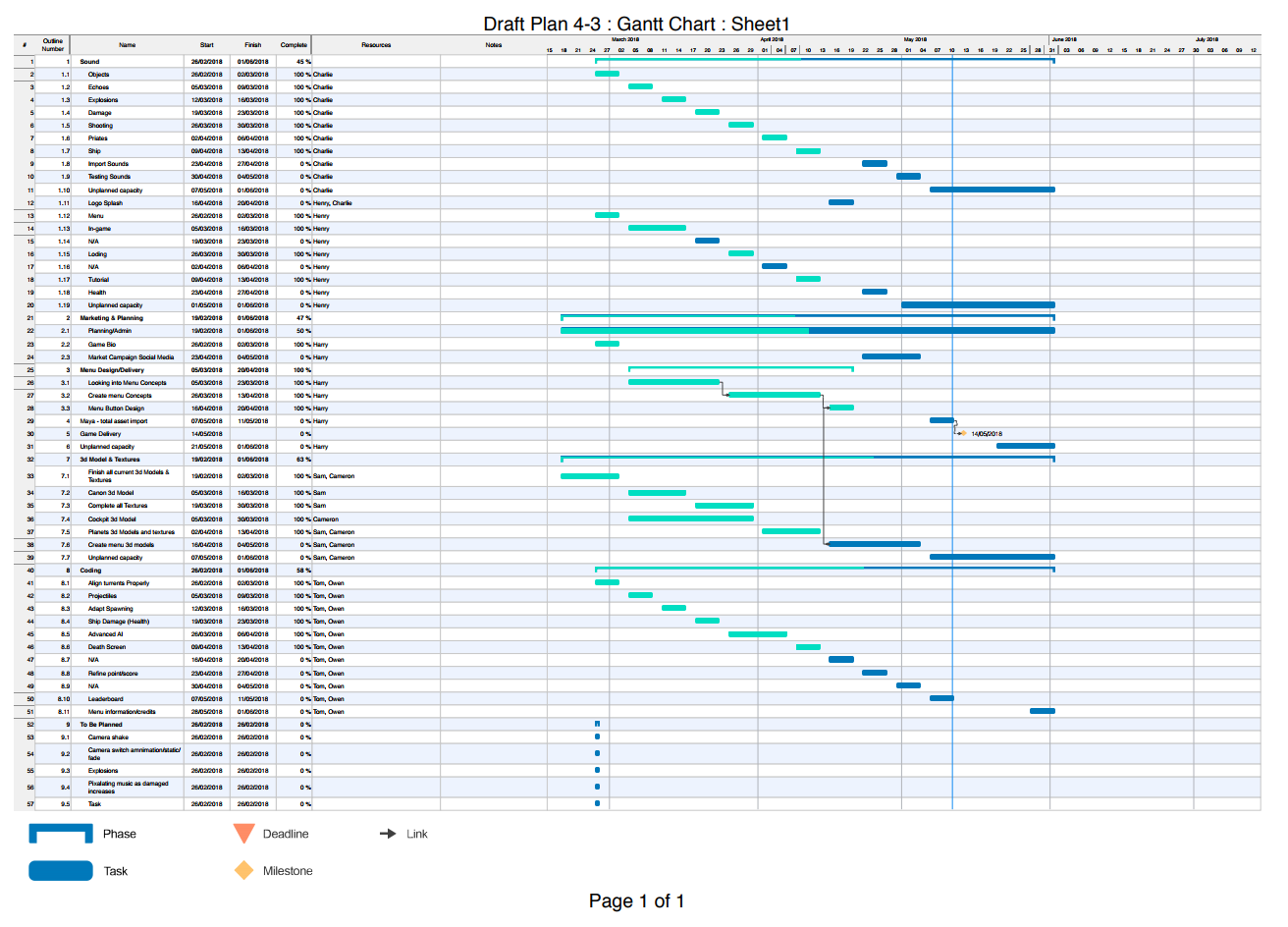
In regards to my independent contribution, I worked with Tom building the game’s “frame” so to speak. We made the base of the game, preparing it within the Unity engine. This was difficult at times, having stumbled into a number of issues regarding complicated buts of code like Advanced AI and Pooling. Luckily, we had planned for this and I was able to use the time left each week to find and fix these issues, keeping on schedule ready for the next week. Of course, along with the rest of the team I fell behind during Week 3 and 4 (the Half Term period), but I was able to make back that shortfall, along with making more realistic judgements when discussing progress on the Production Schedule with Harry.
When overcoming obstacles throughout the project, I am proud to say that both myself and the team handled it very professionally. We hosted meetings at the beginning of every week to discuss performance, looking at how everyone has progressed, and adjusting the production schedule appropriately. These included communication, the half term and miscellaneous code issues, as I discussed above.
Product Evaluation:
For the game overall game, I think both the process and the execution were done to a high standard and the production process was almost seamless. This does not however mean that we did not hit speed bumps down the road. In this part of the review I will be evaluating the product, discussing its ease of use, accessibility, success, failures, as well as whether it met my expectations, its entertainment value and what I feel could be improved if I were to tackle a project like this in the future. This includes changes I would make to the production of the game, as well as things I would have improved in the game.
As a whole, the game is very easy to use. The whole concept is based off of a very basic and well known space shooter, which we have nurtured and developed into our own. This means that users will be able to see familiar aspects to other games, but have a refreshing experience working towards a completely different objective. This allows the player to get to grips with the game mechanics and the general structure of the story very quickly, as well as being able to do so in a familiar environment; outer space.
This allows opportunities for us to make the game as accessible as possible. After identifying the gap in the market for space shooters, we were able to pinpoint the platform that the game could be most accessible on, striking a perfect relationship between accessibility and usability. Having the opportunity to develop the game for Play Station means that in a market that is so diluted, we can gain a familiar, easy to use platform as a springboard for the game.
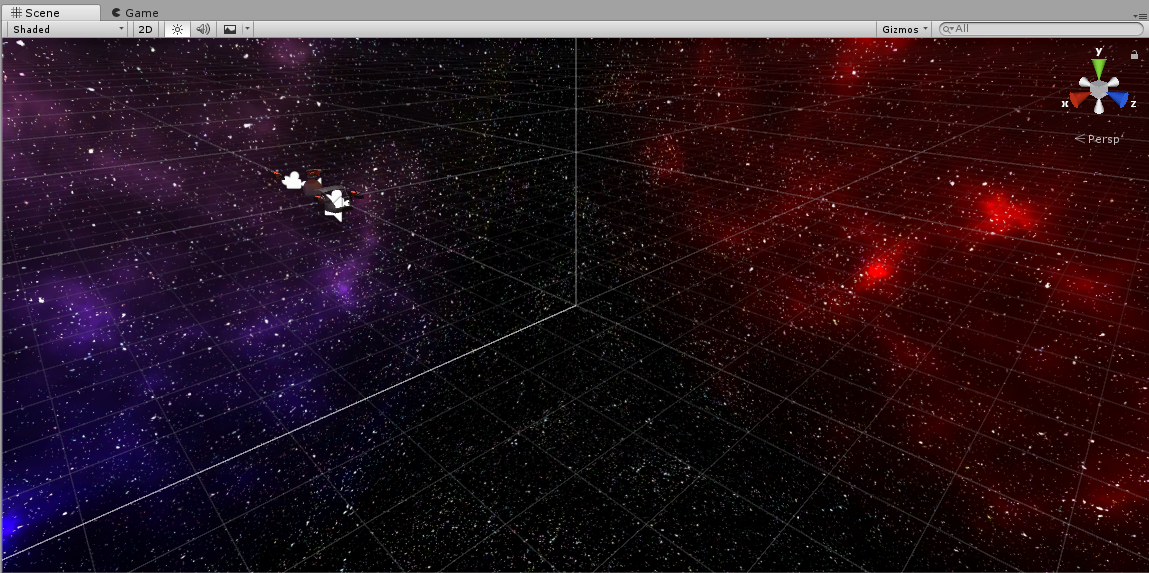
In regards to whether the game met or even exceeded my expectations, I would say that most aspects such as the production of the game met my expectations, whereas other small aspects like the skybox in the game, and other assets like the game music, have exceeded my expectations. The finished product has been better than I imagined, but the journey there was tougher than expected. I really enjoyed the whole process as it really helped me get a feel for what is put into the game throughout the production process, which is something you can only learn by getting involved and not sitting back and watching it all unfold. Getting stuck in to this project has by no means made me blind of our progression as a team, it has really helped us learn a lot, and I especially have a lot to take away from this.
Throughout the development of the game we had a lot of ups and down, including having the tough decisions to postpone certain parts of the game until after E3. The biggest failure we came across as a team was a software issue we encountered on the day of the expo leading up to E3. This meant that the mapping on the game was off kilter and some scenes were not communicating with each other. Unbeknownst to us, the both the Sony Dev Kit and the Unity build used to put the game on the Dev Kit had been updated over the weekend. This meant that we barely hit the deadline for the expo, but getting the game working for then was a success in itself, considering how limited our time was using the Sony Dev Kit. In the future I would make sure that we had more time using the Dev Kit as I feel we made it unfair for ourselves. Not being able to coordinate with other teams using it was also a shame, which ultimately led to this last minute issue we encountered.
I feel the entertainment value of Cosmic Conflict is very high, but a number of improvements could be made. This includes adding the features we have delayed till after E3, including but not limited to the leader board and the enemy counter. If this can be done, the games entertainment value will increase dramatically, making it more enjoyable for the player.
Additional Content:
As part of Rizing Games, the team have presented the product at the expo in Cambridge at the Museum of Computing. We will also be attending the E3 Gaming Convention in L.A in a few weeks time, this will give us the opportunity to present the product to a wider audience and enable us to obtain feedback on a larger scale. This is essential to the production of the game as it will assist us in adjusting finite details which will make the game more appealing to the type of people we are trying to attract.
To take full advantage of this opportunity, myself and 4 other friends have formed a company which we can then use to further develop our game. As we are going to LA with the college, this trip will help us to meet other developers and start to network, as well as pick up some valuable advice before leaving college at the end of this course. This will make a huge impact, allowing us to hit the ground running when we start making games independently.
Setting up the company before E3 allowed us to use more avenues to advertise our game. The big one of these being the ability to use a website that we can fully customise to promote whatever we’d like. In this case, Cosmic Conflict:

The team also settled on creating a Twitter, where we were able to update our followers with our progress, as well as promote the game itself. Below are a few examples of this:


We chose to use Twitter as there was a higher retention rate, meaning users were more invested in things they have seen on twitter, a higher percentage of them actually remaining followers over a long period of time. This graph shows the top 15 most popular social networks.

Even though twitter might not be the largest, it’s form factor means that people will not be put off with constant updates, which could be considered spam on social networks such as Facebook. For the future we have planned to create engaging advertisements to use on YouTube, Facebook, Instagram and Snapchat. Paying these companies to advertise to certain demographics and capping the amount of views allows for a cheap and reliable way to create a playerbase.

Although this could be considered a social network app, Snapchat is more of a social media application, more directly being used for direct messaging one another. This does however mean that it is relatively big, and using the advertisment feature within that app would greatly increase the amount of people viewing our game. It would also correspond with the target market we have set ourselves.
As discussed above, all forms of social media will carry benefits and drawbacks to using each one, so this is why you need to use a range of them, and pinpoint where your target market is most. For example, if your product was targeted and the younger generation, you would be looking more towards Snapchat and Instagram. On the other hand, if you were using Facebook and Twitter this could range all the way up to older users, allowing you to reach a different, more diverse market of users.
Of course, as the team are looking to make the game appealing to both the younger and older generations, being based off of an older game, we will start by using Twitter to get a good range of users, and then stretch out to Facebook, Instagram and Snapchat to tailor the adverts directly, and tackle the ideal playerbase on each platform.
When using these networks to advertise, most of them have tools to show useful pieces of information about your adverts. For example, how many people have viewed a Facebook advert vs. How many have clicked it. This makes the market a lot easier to read. For the website, I am able to use a tool called Google Analytics, which breaks down information about the user including details such as what devices the website is being viewed on. Below is a snapshot of what the overview tool looks like:


E3 Review

In June, L.A. becomes home to E3, the largest gaming convention in the world. It showcases some of the latest games, consoles and accessories money can buy and attracts not only gaming enthusiasts but potential contacts for new up and coming gamers wishing to enter the gaming world. So, who would pass up an opportunity to take part in a trip like this? No-one I know. So June 2018, for team ‘Cosmic Conflict’ it was destination L.A.

From day one, we hit the ground running. Setting up the stall to showcase Rizing Games and displaying our game was just the first step. Meet and greet was our aim and I think as a team we were friendly, very approachable and presented ourselves well. We had quite a lot of interest including an XBox contact that could be useful in our future. The only negative aspect was the public passes which made it more difficult to pitch our game as we initially had to spend quite a lot of time convincing people we were actually the creators of ‘Cosmic Conflict’. However, this small hurdle did not dampen our spirits it just made us more determined to succeed.
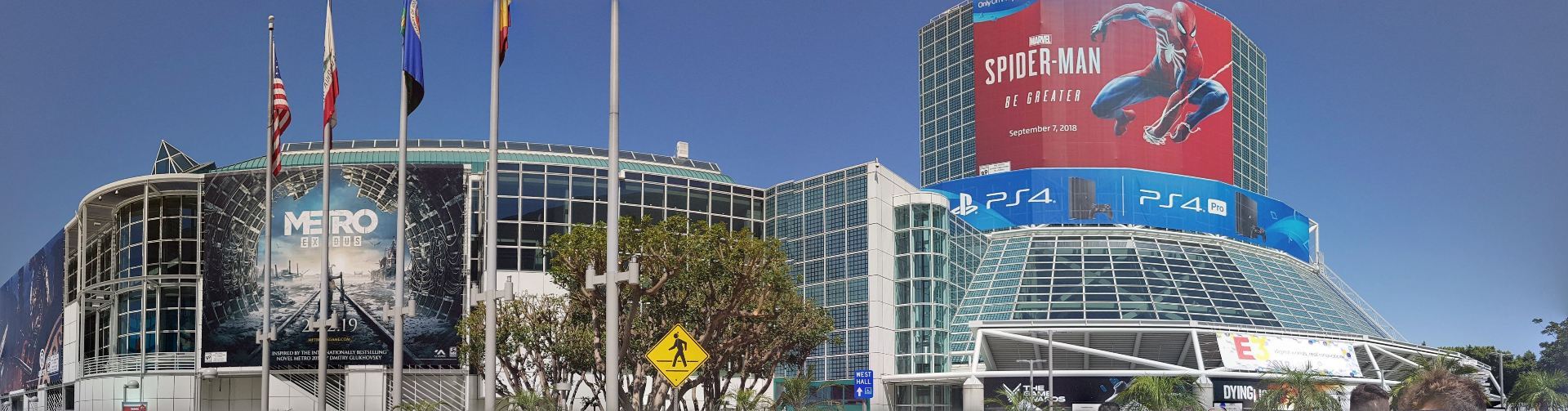
Personally, I enjoyed meeting the Game Director of Rainbow 6 Siege. He was very supportive of new game creators and appreciative of the support for their game. Some of the stands such as Ubisoft, Sony and Microsoft were amazing as they included big screens and opportunities to test out out the latest releases. The Fortnite stand however, was particularly good as I thought they had really thought about the layout and put a lot of emphasis on the interaction.
Overall, an unforgettable trip not to be missed.
References
- DreamGrow. 2018. Top 15 Most Popular Social Networking Sites. [ONLINE] Available at: https://www.dreamgrow.com/wp-content/uploads/2018/04/top-most-popular-social-networking-sites.jpg. [Accessed 14 May 2018].